Key Takeaways
- May is the ideal month to review income trends and adjust tax strategy.
- Waiting until year-end creates pressure and limits flexibility.
- W-2 earners, business owners, 1099 contractors, and real estate investors all benefit from mid-year projections.
- Small structural adjustments in May can create meaningful tax savings by December.
- Proactive tax planning improves cash flow and reduces surprises next April.
April is about filing.
May is about adjustment.
By the time May arrives, something important has happened. The year is no longer theoretical. Income is no longer a guess. Business revenue patterns are forming. Bonuses are being projected. Investment purchases are underway. Expenses are accumulating.
And yet, for many taxpayers, the tax strategy takes a pause until the fall.
That delay is costly.
Because May is the month where flexibility still exists, but enough data is available to make informed decisions.
Mid-year planning is not about panic. It is about positioning.
The Hidden Risk of Waiting Until Q4
When tax planning occurs in November or December, urgency supersedes the strategy.
At that point, income has already been earned. Payroll has already been paid. Property purchases have already been structured. Capital gains may already be locked in.
Options shrink.
In contrast, May provides something different. It provides visibility without pressure.
Income projections can be adjusted. Entity structure can still be evaluated. Retirement contributions can be increased intentionally rather than being rushed. Estimated payments can be corrected before penalties accumulate.
The earlier adjustments are made, the greater the impact.
What Mid-Year Planning Looks Like for Each Income Type
For W-2 Earners
By May, bonus projections and stock compensation trends are often clearer. This is the time to evaluate whether additional withholding adjustments are needed, whether real estate strategies should be implemented, and whether retirement contributions are aligned with income expectations.
Waiting until year-end removes the ability to spread adjustments gradually.
Mid-year planning creates control instead of surprise.
For Business Owners and 1099 Contractors
Revenue patterns begin to stabilize by May. If income is trending higher than expected, the entity structure should be reviewed before additional profit compounds of self-employment tax exposure.
This is also the time to evaluate:
- Whether an S-Corporation election is appropriate
- Whether reasonable salary levels are optimized
- Whether retirement strategies are aligned with projected profit
- Whether Health Reimbursement Arrangements are structured correctly
- Whether Qualified Business Income is being fully utilized
Adjusting mid-year prevents scrambling later.
For Real Estate Investors
Property purchases often happen in the first half of the year. That makes May an important checkpoint.
Depreciation planning, cost segregation timing, bonus depreciation eligibility, and passive versus active loss positioning all require coordination before year-end.
If a sale is being considered, capital gain mitigation planning should begin months before closing.
Real estate strategy is strongest when it aligns with income projections, and May provides the clarity needed to do that properly.
Why Small Adjustments Now Create Larger Results Later
Tax planning is rarely about dramatic last-minute moves.
It is about structured, incremental decisions.
Increasing retirement contributions early compounds benefits. Adjusting payroll structure mid-year spreads tax efficiency over multiple months. Coordinating income streams before peaking reduces pressure later.
When adjustments happen early, they feel manageable.
When they happen late, they feel reactive.
May is the month that separates reactive taxpayers from strategic ones.
Take the Next Step: Adjust Before Mid-Year
April revealed what happened last year. May determines what will happen this year.
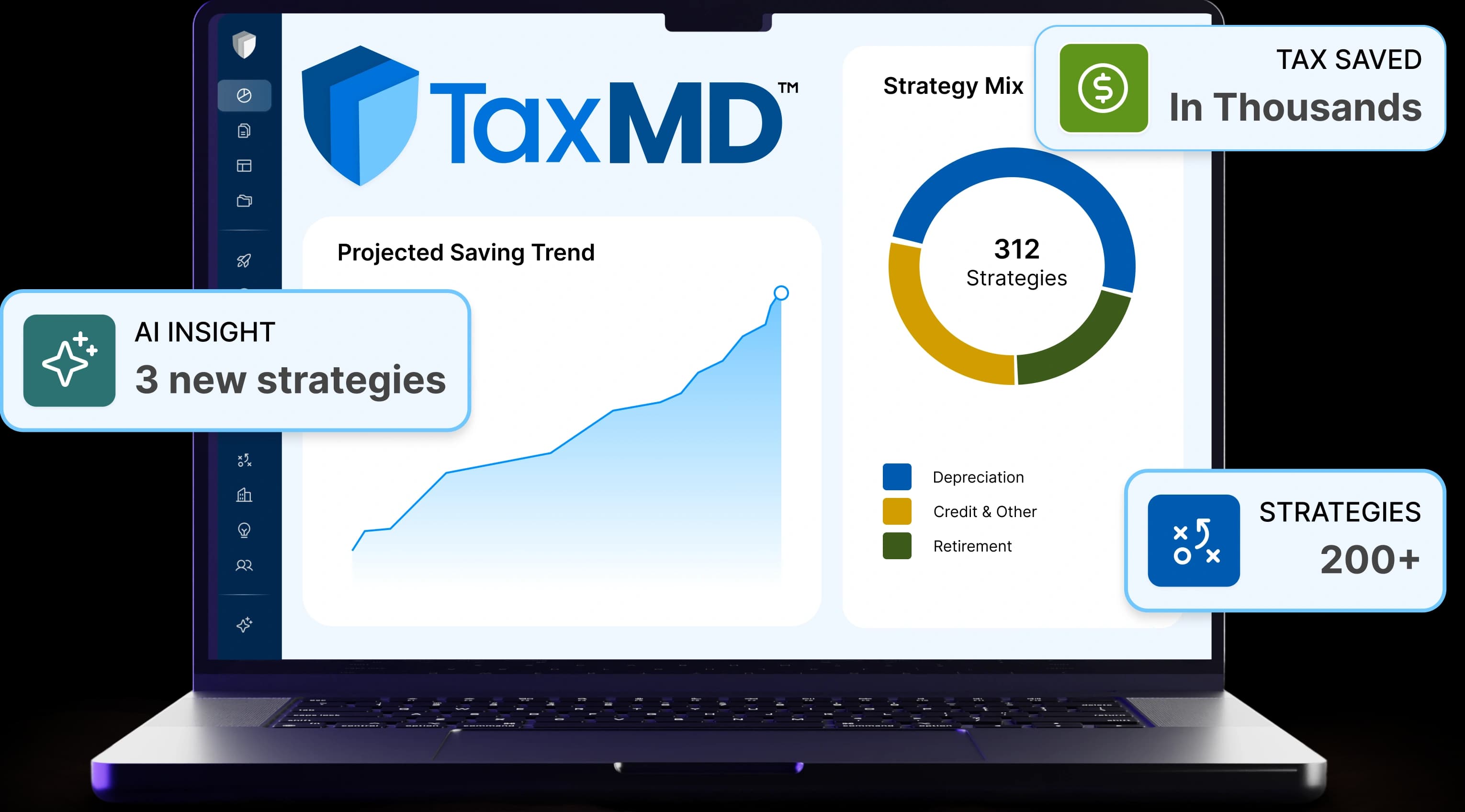
TaxMD™ uses your current income data, entity structure, deductions, and investment activity to generate a personalized mid-year strategy roadmap. The recommendations are built on your numbers, not assumptions.
Based on your inputs, TaxMD™ helps identify where proactive adjustments may create impact before income compounds further.
It helps answer questions such as:
- Is projected income trending higher than expected?
- Should estimated tax payments be adjusted now?
- Is entity structure aligned with revenue growth?
- Are retirement contributions on pace for maximum efficiency?
- Are new property purchases positioned correctly for depreciation?
- Is self-employment income structured optimally?
Rather than waiting for year-end urgency, TaxMD™ allows strategy to be built in May - when flexibility is still high and options remain open.
Get Your Free Tax Plan
Run your personalized TaxMD™ strategy report to identify mid-year adjustments that may improve your tax position before the second half of the year accelerates.
Join the Upcoming Webinar
The upcoming webinar will walk through practical mid-year tax adjustments for W-2 earners, business owners, 1099 contractors, and real estate investors, including income projection strategies and structural planning that can reduce tax exposure before December.
May is not too early to plan.
It is the month where smart taxpayers adjust.