Key Takeaways
- Filing your taxes is not the same as planning your taxes.
- April is the most powerful month to reduce next year's tax bill.
- W-2 earners, business owners, 1099 contractors, and real estate investors all have proactive tax strategies available.
- Waiting until the end of the year limits your options.
- A structured tax plan can legally reduce tax liability and improve long-term cash flow.
April feels like the finish line.
Tax returns have been filed. Payments have been made. Refunds have arrived. For many households and business owners, there is a sense of relief. Taxes are finally done.
But here is what often goes unnoticed.
The biggest tax savings will never happen in April. They happen because of decisions made after April.
Filing a tax return reports history. Tax planning shapes the future.
And April is the one moment when both clarity and time exist together.
Income numbers are finalized. Effective tax rates are visible. Missed deductions are easier to identify. At the same time, there are still months left in the year to make meaningful adjustments.
That combination creates opportunities.
The W-2 Earner Who Thinks Nothing Can Be Done
Many high-income W-2 earners assume their taxes are fixed. The salary feels rigid. Withholding feels automatic. The belief is that there is little room for strategy.
That assumption often leads to overpaying.
Strategic tax planning for W-2 earners may include real estate investments structured to offset income, short-term rental strategies that qualify for accelerated depreciation, retirement optimization, capital gains timing, or structured charitable planning.
These outcomes do not happen by chance. They require planning before year-end.
April is when a W-2 earner can look at a large tax bill and decide that next year will not follow the same pattern.
The Business Owner or 1099 Earner Who Is Too Busy to Revisit Structure
Business owners and independent contractors often focus on revenue growth. Clients need attention. Operations require oversight. Taxes become something addressed once a year.
However, many self-employed individuals quietly overpay self-employment tax because their entity structure has not been reviewed.
An S-Corporation election may reduce payroll tax exposure. A properly designed Health Reimbursement Arrangement may create additional deductions. Retirement stacking strategies may significantly shift long-term tax outcomes. Qualified Business Income optimization may increase deductions.
These strategies require time to be implemented.
Waiting until November limits flexibility. Reviewing structure in April increases control.
The difference between reactive and proactive planning is often thousands of dollars.
The Real Estate Investor Who Misses the Planning Window
Real estate remains one of the most tax-advantaged wealth-building tools in the United States. But the advantages only work when aligned with an income strategy.
After filing season, it becomes easier to evaluate whether the depreciation strategy matched the income exposure.
Cost segregation studies, bonus depreciation timing, Real Estate Professional Status qualification, and short-term rental material participation rules all require forward planning. Capital gain management for potential property sales also requires early analysis.
If property was purchased this year, April is the time to assess acceleration opportunities. If a purchase is planned, entity structuring and income forecasting should happen now. If a sale is being considered, gain mitigation planning should begin well before closing.
Real estate rewards preparation, not reaction.
Why April Matters More Than December
By December, urgency replaces strategy.
In April, there is still flexibility.
Income can be projected. Entity elections can be evaluated. Retirement contributions can be planned. Estimated payments can be adjusted. Depreciation strategies can be timed intentionally.
The earlier the review, the more options there are.
Strategic taxpayers do not wait for pressure. They build structure while time is still available.
April provides clarity from the past year and opportunity for the current one. That combination rarely exists at any other point in the tax cycle.
The Shift from Filing to Strategy
Tax compliance ensures that rules are followed.
Tax strategy ensures opportunities are used.
For W-2 earners, business owners, 1099 contractors, and real estate investors alike, the most important question after filing is simple:
Will next April look the same?
If the goal is a lower effective tax rate, stronger cash flow, and more control, planning must begin now.
Take the Next Step: Turn Insight into Action
The filing season provided clarity. Now it is time to turn that clarity into a strategy.
Most taxpayers leave April knowing what happened but not knowing what to change. TaxMD™ closes that gap.
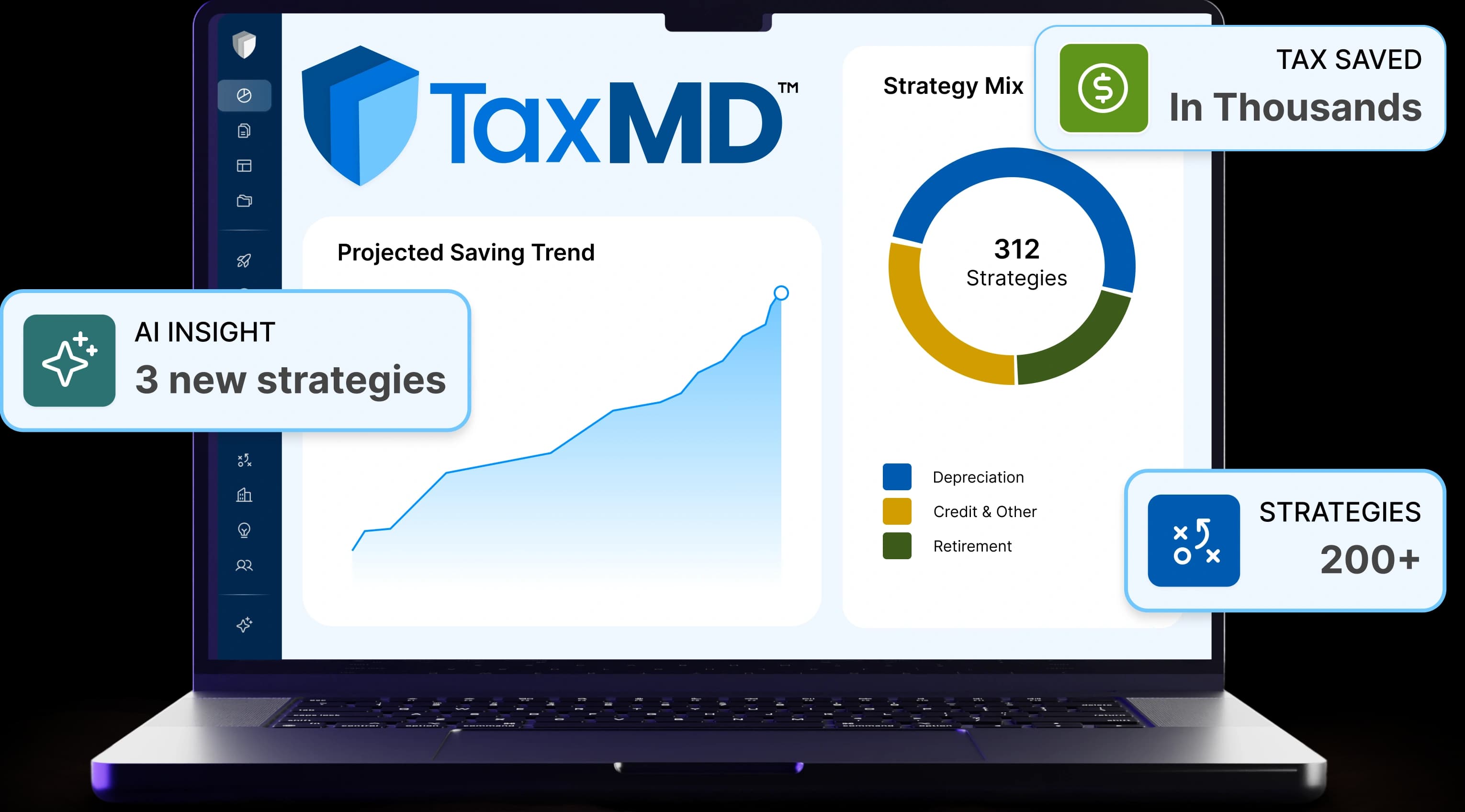
Instead of offering general advice, TaxMD™ uses your own income details, entity structure, deductions, and investment data to generate a personalized tax strategy roadmap. The recommendations are built around your numbers, not generic templates.
Based on your inputs, TaxMD™ identifies which strategies may apply to your specific situation and where opportunities may exist before year-end.
It helps answer questions such as:
- Would an S-Corporation election improve or increase overall tax exposure based on current income levels?
- Could cost segregation or bonus depreciation meaningfully reduce taxable income this year?
- Are retirement contributions aligned with income and long-term tax efficiency?
- Is self-employment tax structured as efficiently as possible?
- Are real estate losses positioned correctly against active or passive income?
- Is Qualified Business Income fully optimized?
- Are capital gains strategically planned or simply reported?
TaxMD™ transforms your personal financial data into actionable strategy insights. It highlights where structural adjustments, timing decisions, or income coordination may create meaningful impact while there is still time to implement changes.
Rather than reacting at the end of the year, TaxMD™ enables proactive planning in April, when flexibility is highest and options are still available.
Get Your Free Tax Plan
Run your personalized TaxMD™ strategy report and receive a structured overview of tax-saving opportunities tailored to your income and goals. The earlier the plan is built, the more powerful it becomes.
Join the Upcoming Webinar
The upcoming webinar walks through real examples of proactive tax planning, explains how different income types require different strategies, and demonstrates how TaxMD™ transforms tax returns into actionable planning tools. Link